Flu outbreak meets the Information Age - Democrat and ChronicleAgainst the advice of our vice president, I have braved the germ-infested world, forced into transit by prior commitments and surrounded by strangers who may not recently have washed their hands. My own, of course, are scabbed from repeated scrubbing French Wine for Dummies “Whether [...]
Flu outbreak meets the Information Age - Democrat and Chronicle
Against the advice of our vice president, I have braved the germ-infested world, forced into transit by prior commitments and surrounded by strangers who may not recently have washed their hands. My own, of course, are scabbed from repeated scrubbing

French Wine for Dummies
“Whether you are an avid collector or wine novice, this book offers an extensive resource in an accessible format.”
—Charlie Trotter, Acclaimed Chef and Award-Winning Author
“This book is an invitation to discover the bountiful wine regions, each different from one another, and is an homage to the beauty and uniqueness of the delicious wines they produced.”
—Georges Duboeuf, Les Vins Georges Duboeuf
“The diversity of French wine is one of its attractions, but it can seem perplexing…until you pick up this marvelous guide. The route is well -marked, easy-to-follow, and the destinations are delicious.”
—Kermit Lynch, Wine Merchant and author, Adventures on the Wine Route
“…Ed McCarthy and Mary Ewing-Mulligan lead us by the hand down the road of adventure to discover the wines of France that they know so well…. In their relaxed, wise, and mischievous way, they show us the joy and pleasure of drinking French wine.”
—Prince Alain de Polignac, Winemaker, Champagne Pommery
You no longer need to be confused or intimidated by French wine. Authored by certified wine educators and authors Ed McCarthy and Mary Ewing-Mulligan, French Wine For Dummies introduces you to the delicious world of fine French wine. Among other things, you’ll discover how to:
- Translate wine labels
- Identify great wine bargains
- Develop your own wine tastes
- Match French wines with foods
Here’s everything you need to know to sip and savor the best—and the best-value—Bordeaux, Burgundy, Beaujolais, Alsace, and other delicious wines. This lighthearted and informative guide covers:
- The story of French wine and how it came to dominate the wine world
- How the French name and label their wines and why
- France’s most important wine regions—including a region-by-region survey of the best vineyards and their products
- France’s other wine regions, including Champagne, Alsace, the Loire Valley, and others
So pour yourself a big glass of Beaujolais Nouveau, sit back, and enjoy the ride as Ed McCarthy and Mary Ewing-Mulligan take you on an intoxicating journey through the wonderful world of French wine.
Customer Review: Good basic knowlage
This book gives the reader a good basic knowledge of French wine. An excellent introduction to the field. The references are very good and information is good, the only critisism is that it comes across too silly. I got the impression that the author was almost “talking down” to me. Good overall.
Customer Review: Straight Forward and Interesting
Whether you are a novice to French wines or have experience, this book will give you the information you need to understand what you are drinking. Easy to read and packed with knowledge. If you are looking for a book on French Wine, this is a great one.
The Health Benefits of Grapes and Their Uses in Home Remedies
There are a few thousand kinds of grapes with very different chemical composition. Grapes are 65-85% water, 10-33% sugar (glucose and fructose), phlobaphene, gallic acid, silicic acid, quercetine, anin, glucosides - mono delphinidin and delphinidin, fruit acids, like apple acid, salicilic acid, phosphoric acid, lemon acid, amber acid, formic acid and a little bit of oxalic [...]
There are a few thousand kinds of grapes with very different chemical composition.
Grapes are 65-85% water, 10-33% sugar (glucose and fructose), phlobaphene, gallic acid, silicic acid, quercetine, anin, glucosides - mono delphinidin and delphinidin, fruit acids, like apple acid, salicilic acid, phosphoric acid, lemon acid, amber acid, formic acid and a little bit of oxalic acid, pectins, tannic substances, salts of potassium, magnesium, calcium, manganese, cobalt, iron and vitamins B1, B2,В6, В12, А, С, Р, РР, K, folic acid and enzimes.
Grape skin has tannic substances and essential oils.
Grape seeds have tannic substances, phlobaphene, lecithin, vanilla and fatty oil.
Grape leaves have sugar, quercetine, carotene, inosite, tannic substances, betain, tartaric acid, apple acid, ascorbic acid, protocatechine acid, potassium, sodium, iron and silicon.
Grapes have been used for treating metabolism disorders, liver, kidney and lung disorders and cardiovascular problems. Grapes improve metabolism and have diuretic, anti inflammation, light laxative and inducing perspiration effect.
Grapes help with nervous exhaustion, hypertension, high blood pressure, bronchitis and gout. Eating grapes strengthens your body when you need to recover from anemia, gastritis with high acidity, metabolism disorder, chronic insomnia and constipation.
It is recommended to include grapes in your diet in the first stage of tuberculosis.
Drinking grape juice daily for a long time helps to lower high blood pressure.
There many grape home remedies in folk medicine.
Extract of grape leaves (boil 1 part of grape leaves with 10 parts of water for 15 minutes, let it cool and filter it ) is used for gargling your throat if you have angina and for washing your body if you have skin disorders.
You should eat raisins, if you cough, have an angina, ulcers in your mouth, bladder disorders and hemorrhoids.
Warnings:
-Grapes and grape juice are not recommended for obesity, stomach ulcers, diabetes, colitis, diarrhea and dysentery.
-You will get an upset stomach if you eat grapes with milk, cucumbers, melon, fish, beer, mineral water and fatty meals.
-If you have a cavity in a tooth, eating grapes or drinking grape juice will intensify your tooth destruction. Rinse your mouth every time you eat grapes.
Yulia Berry is a professional makeup artist. It has been her passion to collect the most interesting natural home remedies, healthy diet plans, and beauty and makeup tips from different countries. She spent a few years researching alternative cures and healthy dieting. The result is her website Great Home Remedies. Sign up for her free newsletter with the exclusive remedy of the week!
http://www.greathomeremedies.com/
-
 Sour Grapes (Claudia) The latest adventure for the glamorous Roman sleuth Claudia Visiting her stepmother at the family estate in Tuscany, Claudia is concerned at the gaggle of hangers-on surrounding the old lady. And what of the series of recent local murders, and the mishaps that have befallen a number of people? Amidst the mysteries of the local religion, could the god Fufluns be working some plan; or even Veive, the god of revenge? Or are there even more sinister forces at work?
From Vines to Wines: The Complete Guide to Growing Grapes & Making Your Own Wine
Special Sections: California Summer Fruit Coachella Valley grape - Thepacker.comBookmark Although table grape volume from the Coachella Valley could be down a bit this year, quality coming out of California’s first growing area to come into production should be exceptional, thanks to good growing conditions, grower-shippers A grape way to [...]
Special Sections: California Summer Fruit Coachella Valley grape - Thepacker.com
Bookmark Although table grape volume from the Coachella Valley could be down a bit this year, quality coming out of California’s first growing area to come into production should be exceptional, thanks to good growing conditions, grower-shippers
A grape way to wrap salmon - Atlantic City Press
The grape leaves keep the salmon fillets tucked inside moist while also imparting some of their briny flavor. The texture and flavor of grape leaves can be irresistible, and this recipe puts them to supersimple, delicious use as a wrap for salmon
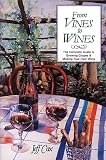
From Vines to Wines: The Complete Guide to Growing Grapes & Making Your Own Wine
Customer Review: The only book of its kind, it helps to have a chem degree!
This is an excellent book, I recommend it to anyone who wishes to prepare wine from scratch. The book is written for the reader with knowledge of basic science concepts, especially a chemistry degree.
Customer Review: Whether planting one vine or one thousand, read this book!
Jeff Cox does what so few writers can do; he makes viticulture so interesting that you won’t want to put this book down. That’s saying a lot!
The whole book is a masterful handbook for the home or small commercial grower. From selecting the vines and a growing site to planting, growing, pruning, and harvesting to making wine, Cox literally packs the pages with useful information, tables and how-to illustrations. Even his appendix on grape pests and their control is written as a trouble-shooting guide based on symptoms rather than cause. This is both refreshing and useful.
If you can only buy one book on the subject, this is the one to buy.
Characterization and classification of Italian Barbera wines by using an electronic nose and an amperometric electronic tongue [An article from: Analytica Chimica Acta]
This digital document is a journal article from Analytica Chimica Acta, published by Elsevier in 2004. The article is delivered in HTML format and is available in your Amazon.com Media Library immediately after purchase. You can view it with any web browser.
Description:
An electronic tongue based on amperometric detection in a flow injection system (FIA) and a commercial electronic nose have been used to characterize and classify four types of Barbera wines having different denominations of origin and produced in northern Italy in enclosed geographical areas. E-nose and e-tongue data were compared and elaborated together with those of chemical analysis and colour evaluation. All data were treated by multivariate data processing based on principal component analysis (PCA), linear discriminant analysis (LDA) and classification and regression trees (CART) analysis. In the classification of Barbera wines the best results were obtained from LDA applied to electronic nose and electronic tongue data, this analysis giving 100% correct assignation and 98.1% correct prediction.

No comments:
Post a Comment